Important Note!
We use cookies to ensure you get the best experience on our website.
By clicking ‘Agree,’ you accept our use of cookies as outlined in our cookies policy
Sector weightings are heavily tilted toward Financials and Industrials.
China’s been flexing hard on the world stage, and everyone’s eyes are on its stock markets these days. If you’re even remotely curious about Chinese stocks, you’ll come across the term SSE Composite Index about five minutes in. This index, often seen in global financial reports and economic analyses, reflects the performance of the Shanghai Stock Exchange (SSE) and serves as a critical benchmark for investors both in China and worldwide.
But what exactly is the SSE Composite Index? How is it calculated, and why does it matter for investors both in China and worldwide? Let’s break it all down in this comprehensive guide.
The SSE Composite Index (also often called the SSE Index or by its code 000001) is a market capitalization-weighted index that tracks the performance of all A-shares and B-shares listed on the Shanghai Stock Exchange.
The SSE Composite Index is often compared to other Chinese indices, such as the CSI 300 (which covers both Shanghai and Shenzhen exchanges), yet it continues to be the main indicator specifically for the Shanghai market.
To calculate the Shanghai Index, we use a “Paasche formula,” which weights stock prices by their market capitalization – meaning that each stock’s influence on the index is proportional to its market value (price multiplied by the number of shares issued).
Calculation Formula:
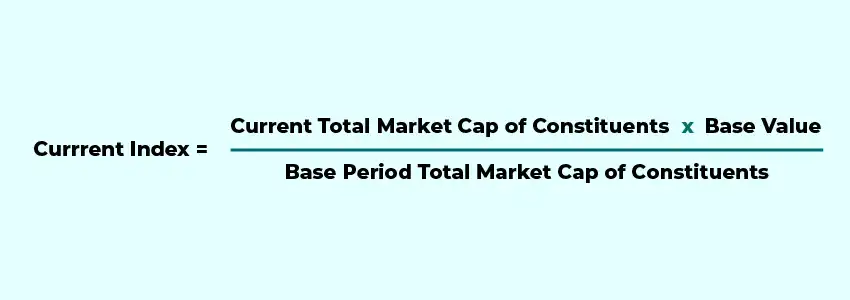
Current Total Market Cap: Market value of all constituent stocks at current prices.
Base Period Market Cap: Market value at the base date.
Base Value: Set to 100.
This structure ensures that larger companies like ICBC, PetroChina, Kweichow Moutai, Ping An Insurance, and SAIC Motor have a more substantial impact on the index than smaller ones.
The SSEC Index components include every stock listed on the Shanghai Stock Exchange, covering both A shares (available to domestic and some foreign investors) and B shares (primarily for foreign investors) and providing a diverse mix of:
As of early 2025, estimates suggest that the largest sector within the index is Financials & Real Estate, accounting for over 27% of the total index market cap. This is followed by Industrials, which represent more than 15.9% of the index. Other sectors include Technology, Consumer Goods, Energy and Resources, Utilities, and Healthcare, but these play a smaller role compared to the dominant financial and industrial sectors. This diversity allows the SSE Composite to reflect broader economic trends in China, from industrial growth to consumer sentiment.
Notably:
The SSE Composite Index is more than just a number scrolling across a screen – it has real-world implications:
CSI 300 Index: Tracks 300 large-cap stocks from SSE and Shenzhen.
Hang Seng Index: Represents Hong Kong’s stock market.
Investing in the SSE Composite Index is not as straightforward as buying a single stock. However, it offers a variety of options to suit different risk levels and investment strategies. From beginner-friendly ETFs to complex derivatives, here’s a concise guide to your options:
ETFs mirror the index and trade like stocks on major exchanges. They offer a simple, low-cost entry point, making them ideal for beginners and active traders alike. With low capital requirements and intraday liquidity, SSE Composite ETFs provide convenient exposure to China’s top companies.
These funds also track the SSE Composite but are priced only once daily and usually require a higher initial investment. They’re best for long-term investors seeking passive exposure with less frequent trading.
CFDs allow you to speculate on index price movements with leverage, magnifying both gains and risks. They support short selling and can often be traded after hours. Due to their complexity and risk, CFDs are suited for experienced traders.
SSE Composite futures let you buy or sell the index at a set price on a future date. These are commonly used for speculation or hedging and involve leverage, making them riskier and more suitable for seasoned professionals.
Instead of the entire index, you can invest in leading companies within it. This offers targeted exposure but lacks the diversification of the full index. Stock picking requires more research and is best for confident, hands-on investors.
Like any stock market indices, the SSE Composite Index comes with its own limitations and risks, especially for international investors:
A significant portion of the index is made up of state-owned enterprises, which can distort the index’s market reflection, especially during government intervention.
Compared to U.S. indices like the Nasdaq, the SSE Composite has a smaller share of high-growth tech firms and is heavily weighted toward financials and industrials, increasing exposure to sector-specific risks.
The Chinese stock market in general and the Shanghai Index in particular can be highly volatile due to regulatory shifts, policy announcements, and geopolitical tensions, which can lead to sharp gains or losses.
Not all international investors can directly access the SSE; some may face limitations or need to use intermediaries. And while foreign access has improved, it’s still not as open or liquid as Western markets.
The future outlook for the SSE Composite Index is closely tied to China’s ongoing economic development, regulatory reforms, and efforts to open its financial markets to the world.
The Shanghai Composite Index will remain a vital tool for traders, analysts, and investors seeking insight into the world’s second-largest economy.
Understanding what the SSE Composite Index is, how it’s calculated, its sector composition, and its investment potential is essential for anyone interested in Chinese markets or global investing. It’s a snapshot of China’s corporate and economic landscape, offering rich insights and diverse investment opportunities.
Explore Asian markets and beyond — sign up and trade smartly with FXGT.com.

Apple (NASDAQ: AAPL) stock is entering a new chapter, with three developments likely to shape its outlook: a change in leadership, the next iPhone cycle and evolving EU r...

Marvell Technology (MRVL) has expanded its partnership with Google, putting Marvell stock in focus across the AI semiconductor sector.

Get the FXGT App